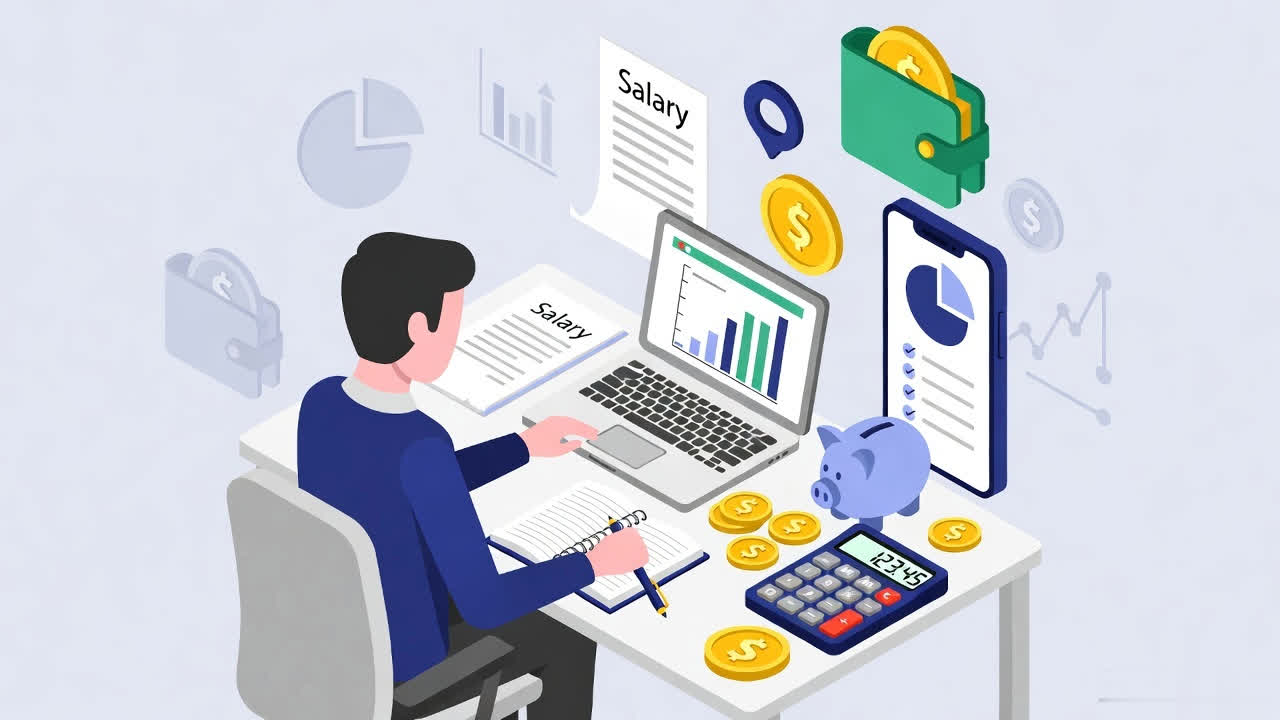
Managing money properly after receiving your salary is one of the most important financial habits anyone can develop. Many people earn a decent income, yet by the end of the month they struggle to understand where all the money went. This usually happens because there is no clear plan for spending, saving, and investing.
Learning how to manage money after salary does not require complex financial knowledge. In fact, simple daily habits can help you control your finances, reduce unnecessary spending, and build long-term financial security.
In this guide, we will discuss practical and easy money saving habits that anyone can follow in daily life.
Also Read :
Why Managing Salary Properly Is Important
Your salary is not just income for the month; it is the foundation of your financial future. If you manage it wisely, you can build savings, invest for the future, and avoid financial stress.
On the other hand, poor money management can lead to debt, emergency problems, and constant financial pressure.
Here are some key benefits of managing your salary properly:
- Helps build emergency savings
- Reduces financial stress
- Prevents unnecessary debt
- Allows long-term investments
- Improves overall financial discipline
Good money management is not about earning more money. It is about using your current income in a smarter way.
Step 1: Create a Simple Monthly Budget
The first step to managing money after receiving your salary is creating a monthly budget. A budget helps you understand how much money is coming in and where it should go.
You do not need complicated spreadsheets. A simple plan is enough.
A basic budget can include:
- Essential expenses (rent, food, electricity)
- Transportation costs
- Savings
- Investments
- Personal spending
- Emergency fund
Once you know your fixed expenses, you can decide how much money should be saved every month.
A useful rule many people follow is the 50-30-20 rule:
- 50% for necessities
- 30% for lifestyle expenses
- 20% for savings and investments
This simple method keeps your spending balanced.
Step 2: Pay Yourself First
One of the most powerful money habits is paying yourself first. This means saving a portion of your salary before spending anything else.
Most people save money at the end of the month. Unfortunately, by that time very little money remains.
Instead, transfer a fixed amount to your savings account immediately after your salary arrives.
Even saving 10% to 20% of your salary can create a strong financial foundation over time.
You can automate this process through bank auto-transfer so that saving becomes effortless.
Step 3: Build an Emergency Fund
Unexpected expenses are part of life. Medical emergencies, job loss, or sudden repairs can create financial stress if you are not prepared.
That is why building an emergency fund is essential.
Ideally, your emergency savings should cover 3 to 6 months of living expenses.
Start small if necessary. Even a small emergency fund can prevent you from using credit cards or loans during difficult situations.
Keep this money in a separate savings account so that it is not used for daily spending.
Step 4: Track Your Daily Expenses
Many people lose money through small daily expenses without realizing it.
For example:
- Frequent online food orders
- Unplanned shopping
- Subscription services
- Impulse purchases
Tracking your expenses helps you understand spending patterns.
You can use:
- A notebook
- A mobile expense tracking app
- A simple spreadsheet
At the end of the month, review your spending and identify unnecessary expenses. Even small improvements can lead to significant savings over time.
Step 5: Avoid Lifestyle Inflation
Lifestyle inflation happens when your spending increases every time your income increases.
For example, if you receive a salary raise, you may start spending more on shopping, dining, or luxury items.
While improving your lifestyle is normal, increasing expenses too quickly can destroy your savings potential.
Instead, try this approach:
- When salary increases, increase savings first
- Maintain controlled spending
- Invest extra income for future goals
This habit can accelerate your financial growth.
Step 6: Set Clear Financial Goals
Saving money becomes easier when you have a clear purpose.
Financial goals can include:
- Buying a house
- Starting a business
- Building retirement savings
- Funding children’s education
- Achieving financial independence
Write down your goals and create a timeline for achieving them.
For example:
- Emergency fund within 1 year
- Investment portfolio within 3 years
- Debt-free life within 5 years
Goals provide motivation and discipline in financial decisions.
Step 7: Reduce Unnecessary Debt
Debt can become a major obstacle to financial stability. High-interest loans and credit card balances can consume a large portion of your salary.
To manage debt effectively:
- Avoid unnecessary loans
- Pay credit card bills on time
- Focus on clearing high-interest debts first
- Do not rely on credit for regular expenses
Once debt is reduced, you will have more money available for savings and investments.
Step 8: Start Investing Early
Saving money is important, but investing helps your money grow.
If you only keep money in savings accounts, inflation may reduce its value over time.
Basic investment options can include:
- Mutual funds
- Index funds
- Fixed deposits
- Retirement funds
- Government saving schemes
Starting early allows your money to grow through compounding.
Even small monthly investments can create significant wealth over the long term.
Step 9: Use Cash or UPI Mindfully
Digital payments have made spending very convenient. However, this convenience can also lead to overspending.
When spending feels effortless, it becomes harder to control purchases.
To maintain financial discipline:
- Set daily spending limits
- Avoid impulse purchases
- Wait 24 hours before buying non-essential items
- Use budgeting apps to track transactions
Being mindful of every payment helps protect your savings.
Step 10: Develop Daily Money Saving Habits
Financial success often depends on small daily habits rather than big financial decisions.
Here are some simple habits that can help you save money consistently:
Cook more meals at home instead of ordering food frequently.
Plan shopping lists before visiting stores to avoid impulse buying.
Cancel subscriptions that you rarely use.
Compare prices before making large purchases.
Use discounts and offers wisely but avoid buying unnecessary items.
These small habits can save a significant amount of money every month.
Common Mistakes People Make After Receiving Salary
Many people lose control of their finances due to common mistakes such as:
Spending first and saving later.
Ignoring small expenses that accumulate over time.
Using credit cards without a repayment plan.
Not planning for emergencies.
Avoiding investments due to lack of knowledge.
Avoiding these mistakes can significantly improve your financial stability.
Also Read :
Conclusion
Learning how to manage money after salary is one of the most valuable life skills. You do not need a high income or advanced financial knowledge to improve your finances.
What truly matters is discipline, consistency, and smart financial habits.
By creating a simple budget, saving before spending, tracking expenses, and investing regularly, you can gradually build financial security and reduce money stress.
The earlier you develop these habits, the easier it becomes to achieve long-term financial goals and enjoy a more stable and comfortable life.